Eleven years after our extensively read original blog, how has the OTC CCP and the LCH SwapClear default management process evolved and what should clearing members be preparing for today?
Why Revisit This Topic?
Back in 2015, we discussed the mechanics of the SwapClear default management process (DMP) and the operational burden imposed on clearing members participating in fire drills that are run to practice the DMP. In this, and a follow up blog in 2019 on CCP Default Management Processes, we reviewed the tools that Clarus offers to support the LCH Swap Clear and other Global CCPs’ processes.
A lot has changed since then.
Mandatory clearing has expanded, portfolio sizes have grown, regulators have increased their focus on operational resilience, and industry-wide simulation exercises now regularly test scenarios involving multiple CCPs and multiple asset classes.
Yet a lot has stayed the same and the core challenge remains:
Can a CCP and its Members successfully manage the default of a major clearing member without disrupting the wider market?
The Three Pillars of the Modern Swap Clear DMP
LCH SwapClear continues to describe a default management framework built around three key activities:
- Client Porting
- Hedging the Defaulters House Portfolio
- Auctioning the Portfolio
Let’s review each component.
Client Porting
The first objective is protecting clients.
Where possible, client positions and collateral are ported to a non-defaulting clearing member. This allows client hedges to remain intact while minimizing market disruption.
When porting, the clearing member receiving the Client portfolio needs to value the portfolio and assess if this portfolio is within its own risk tolerances for the client.
Hedging the Defaulter’s House Portfolio
Once a member defaults, the CCP cannot simply wait for an auction, the portfolio must first be stabilized.
This is where the CCP’s Default Management Group (DMG) becomes critical. The DMG consists of market experts seconded from clearing members who assist in reducing market risk and preparing portfolios for auction.
Think of it as converting a highly directional and potentially unstable swap book into something that auction participants can realistically price.
The DMG manages the following key steps in the default process:
- Default declaration
- Risk assessment
- Hedging
- Auction preparation
Auctioning the Portfolio
After hedging, the remaining positions are divided into auction packages. These may be split by:
- Currency
- Product type
- Risk profile
Participating clearing members then need to be able to:
- Load the portfolio into a risk solution.
- Confirm a consistent value for the portfolio based on market data provided by the CCP.
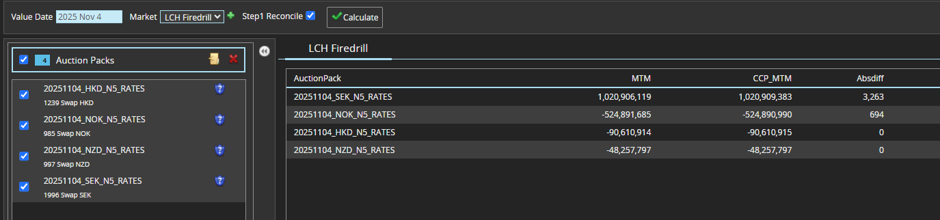
Figure 1: Valuing a Portfolio based on CCP’s Market data
- Assess the residual risk in the auction portfolio to understand if there is any risk that requires additional hedging.
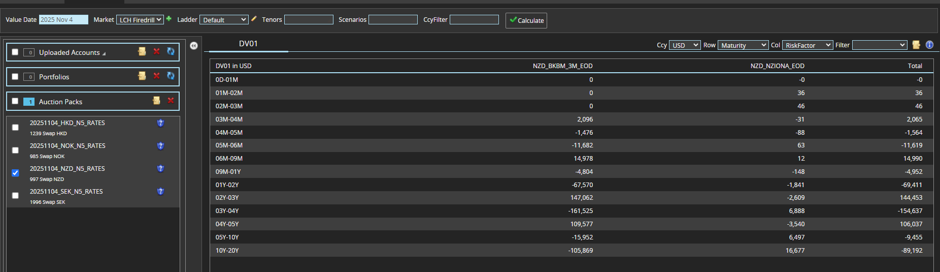
Figure 2: Assessing the residual risk in the defaulting portfolio
- Assign costs to the management of the residual risk.
- Value the auction portfolio using real-time market data at a predetermines window and submit bids for the costs to manage and a valuation of each package.
Auction participation is a fundamental requirement of an interest rate CCP’s membership.
Fire Drills Have Become More Sophisticated
This is arguably where the biggest change has occurred since 2015. Historically, many CCP fire drills focused on a single CCP and a single member default scenario.
Today, the industry is increasingly focused on:
- Multiple CCP defaults
- Concurrent auctions
- Cross-product portfolios
- Cross-border operational coordination
The development of CCP Global International Default Simulation (CIDS) exercises is evidence of this trend. These exercises were specifically designed to test operational bottlenecks that might emerge if several CCPs initiate default management processes simultaneously.
What Clearing Members Are Really Testing
A modern fire drill is no longer just an auction exercise. Participants typically need to demonstrate:
- Risk analysis
- Hedging decision processes
- Bid generation using real-time market data
- Governance approvals
- Technology resilience
- Staff availability under stressed conditions
In other words, firms are testing an entire operating model. At Clarus, Charm our OTC Risk Platform is designed to support these processes. Not just when conducting a Firedrill, but for the daily risk management of cleared and uncleared OTC products.
Thoughts
One interesting observation is that the fundamental mechanics of CCP default management have changed remarkably little.
The workflow remains:
Port → Hedge → Auction → Loss Allocation
What has changed is the scale.
- Today’s SwapClear portfolios are larger.
- Regulatory expectations are higher.
- Technology dependencies are greater.
Industry exercises increasingly assume a world where multiple CCPs are running auctions at the same time. For clearing members, the challenge is no longer simply participating in a fire drill. It is demonstrating that they can do so repeatedly, across multiple CCPs and multiple portfolios, under stressed market conditions.
At Clarus we help our customers adopt best practices in default management.
If you are interested in learning more, please reach out.