
Exploring Seasonality in a Time Series with R’s ggplot2
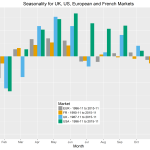
Inflation index values are decomposed into trend, seasonality and noise. Certain types of graph help identify seasonality. Graphs can be created simply and quickly in R. Simple graphs can be refined for stronger visual impact. Recently, I have been looking at inflation indices and studying their seasonality. The best way to see the overall trend and seasonality in this […]
Exploring Commodity Data on the SDRs
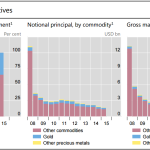
Today we go to the far reaches of the Swap Data Repositories and explore commodities. You probably know that SDRView normalizes and enriches the Interest Rate, Credit, and Foreign Exchange asset classes. We’re quite fluent in that. Further, we have done some studies on the Equity asset class in the recent past. That leaves us […]
SDR Data via Microservices
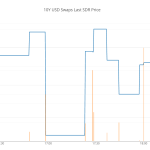
SDR Prices can be retrieved directly from Clarus using very simple code This allows our users to efficiently bring the data into any suitable environment This means that SDR data is available via an API This API is also simple to implement and simple to access. As I said last time, I’m not a coder. Fortunately, our developers help me […]
CCP Initial Margin Models – A Comparison
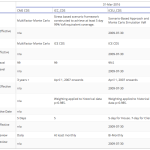
Last week I looked at CCP Disclosures 1Q2016 – Trends in the Data , so this week I thought it would be interesting to focus on disclosures for Initial Margin Models to see how they compare. Background Under the voluntary CPMI-IOSCO Public Quantitative Disclosures by CCPs, over two hundred quantitative data fields covering margin, default resources, […]
Liquidity Conditions in USD Swaps
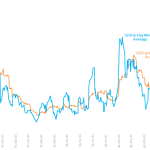
We analyse Liquidity using our Price Dispersion Index We find that liquidity conditions have worsened for 10 year USD swaps The analysis quantifies liquidity using price and volume We conclude that illiquidity begets illiquidity Liquidity often feels ephemeral and fleeting when you’re trying to transact. To counteract this, it is beneficial to quantify liquidity conditions, taking the subjectivity out […]
CCP Disclosures 1Q2016 – Trends in the Data
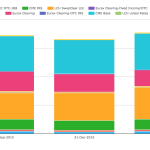
Central Counterparties recently published their new CPMI-IOSCO Quantitative Disclosures, meaning we now have three sets of disclosures, so I thought it would be interesting to look at trends in the data. Background Under the voluntary CPMI-IOSCO Public Quantitative Disclosures by CCPs, over two hundred quantitative data fields covering margin, default resources, credit risk, collateral, liquidity risk and more […]
Mechanics and Definitions of Bond Futures
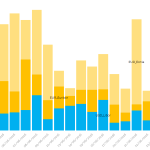
We focus on Bond Futures. They are a deep source of liquidity. We define the contracts and look at some of their common features. Analysing volumes across major bond futures is simple in CCPView. We find that around 60% of bond future notional is US related, with the remainder European. Invoice Spreads account for 3% of volumes in bond futures. What is […]
Will the Bank of England cut rates?
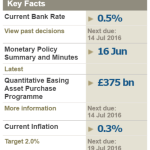
Our Brexit blogs and June Swaps Review both show that OIS volumes have been very large recently We therefore have greater price transparency for short end interest rates This is particularly interesting when a central bank may be about to change monetary policy The BoE may be about to cut rates in response to the surprise Brexit […]
June 2016 Swaps Review – Volumes Up 30 to 50%
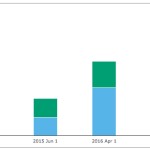
Continuing with our monthly review series, let’s take a look at Interest Rate Swap volumes in June 2016. First the highlights: On SEF USD IRS in June 2016 volume was 34% higher than May USD OIS volume has increased month on month USD Swap Curve dropped 30 to 35 bps across the term structure EUR & GBP volumes were higher […]
Mechanics and Definitions of Short Term Interest Rate Futures
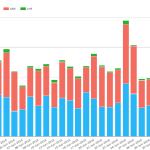
We focus on Short Term Interest Rate Futures contracts. In volatile markets, they are a deep source of liquidity. We define the contracts and look at some of their common features. Analysing volumes across all Short Term Interest Rate futures is simple in CCPView. We find that Short Sterling is more liquid than expected…. …and that FRA volumes relative to […]